Uzbekistan
The Republic of Uzbekistan is a country located in the central part of Central Asia. Former Soviet republic. It is washed by several inland waters, but does not have direct access to the sea. One of the largest inland water bodies in Uzbekistan is the Aral Sea, but due to environmental problems and the depletion of the Amu Darya and Syr Darya rivers, it has significantly decreased in size and almost dried up. It borders with Kazakhstan, Turkmenistan, Afghanistan, Tajikistan, and Kyrgyzstan.
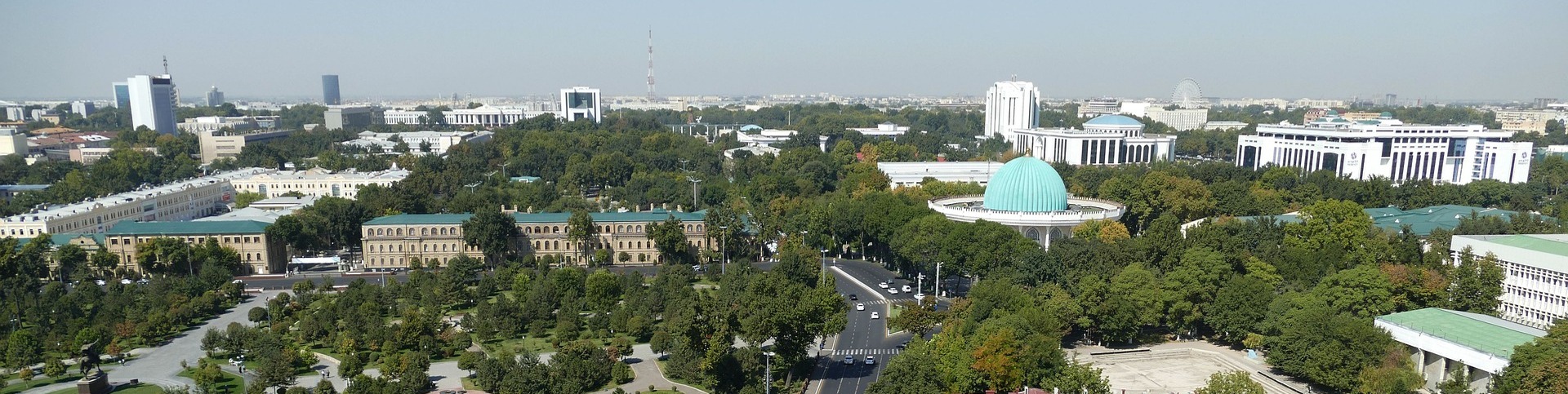
The capital - Tashkent - is the largest city in terms of population, the political, economic, cultural and scientific center of the country. The form of government is a presidential republic. The head of state is the president.
Climate. Sharply continental Most of the country - it's mountains, deserts and steppes. The average air temperature in summer reaches +40°C, in winter in the desert it can reach -30°C. Water plays an important role in agriculture and the life of the country. Rivers like the Amu Darya and Syr Darya serve as sources of water for irrigation and electricity generation.
Number. In 2022, the population was 35,300,000 people.
Language. The state language in the country is Uzbek. On the territory of the Republic of Karakalpakstan, along with Uzbek, the official language is also the Karakalpak language. In schools, it is compulsory to study English and other foreign languages. The second most important language in Uzbekistan is Russian, which is spoken by the majority of the population.
The quality of the medical and educational system in Uzbekistan can vary by location. The country has a public medical system, including hospitals and clinics, where citizens can receive medical care free of charge or for a nominal fee. However, the quality of medical services and the availability of medicines can be uneven. In some major cities in Uzbekistan, there are private medical clinics and hospitals that provide a higher level of services and treatment for a fee.
Education in the country is free at all levels, but there are private schools and universities. The quality of education varies by region. In large cities, it is of better quality than in smaller cities and rural areas. The country actively cooperates with international universities to improve the quality of education and student exchange.
Uzbekistan has rich natural resources, including oil, natural gas, uranium, gold and other metals. These resources play an important role in the country's economy and form the basis for extraction and export. The country produces a wide range of agricultural products, including cotton, fruits, vegetables, and grains. Cotton is one of the main export commodities. Uzbekistan has developed textile and chemical industries that produce textile goods, fertilizers and chemical products.
In recent years, Uzbekistan has introduced a number of economic reforms and liberalization aimed at improving the investment climate and reducing bureaucratic barriers. This has led to an increase in attracting foreign investment. Also, the country is actively developing the tourism sector, attracting foreigners with its rich history, architectural monuments and cultural attractions. But despite some positive changes in the economy, Uzbekistan still has high youth unemployment, rural poverty and an unbalanced service sector.
Uzbekistan is a sunny and beautiful country. Life in the country can be attractive for those who appreciate the beauty of nature and outdoor activities. For those who are interested in centuries-old culture, historical sights. For those whose professional activities are related to education, medicine and the oil and gas industry.